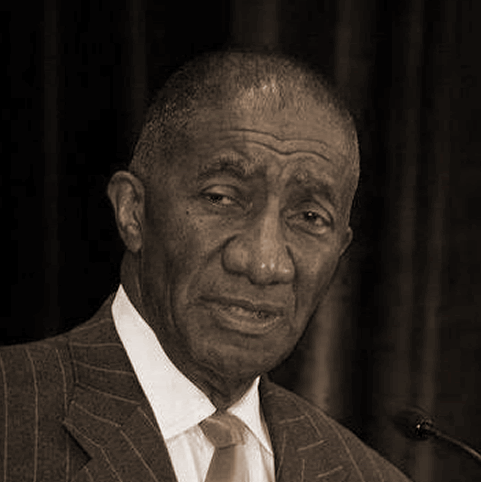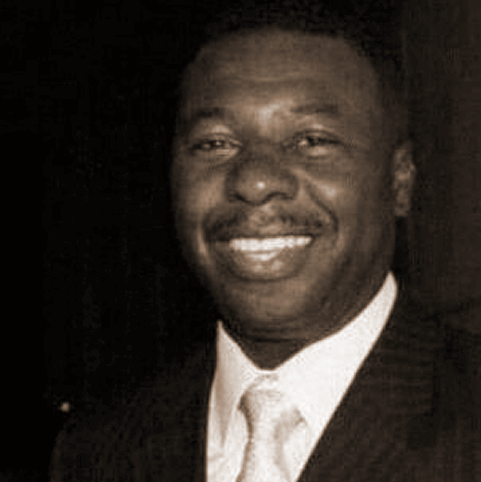
Over the years, Roy Willis built an extensive network of real estate planning and development professionals since 1969 when he graduated with an MBA from Harvard Business School and moved to Berkeley, CA where he developed a brand new, first-class, Black-Owned New Orleans- styled Restaurant on the Berkeley Marina called The Dock of the Bay (in honor to musician and song writer, Otis Redding and the song which he wrote by that name). During that timeframe (1969-1976), he also taught a course related to Urban Planning and Development at University of California at Berkeley's School of Planning and Environmental Design. He also ran for the Berkeley City Council in 1971 and built a considerable base of support and name recognition; although he did not win the seat in West Berkeley which he sought. From1976-81, he joined the National Urban Reinvestment Task Force of Washington, D. C. as its West Coast Director in San Francisco, CA. He was responsible for assisting major banks to increase their lending results within the eleven western states under his jurisdiction, especially in major cities. The "National urban Reinvestment Task Force" was a Consortium of Federal Financial and Housing Agencies (comprised of The Federal Reserve System, the Federal Home Loan Bank System, the Federal Deposit Insurance Corporation, and the U. S. Department of Housing and Urban Development). Our mission was to "end redlining by the national banking system" which had been broadly accused by many of having racially discriminated against minorities in "red-lined, lower income, minority areas," mostly in major cities. The other mission was to work with the national banking system to promote "Greenling" by getting the major banks to significantly increase their lending in major cities like San Francisco, Oakland, Los Angeles, Phoenix, Seattle, Denver, Juneau,(Alaska). From 1981-86, he joined a Toronto-based developer called Olympia and York as its Director of Operations and assisted the company in overseeing the planning, designing, and entitling of the Yerba Buena Gardens Mixed-Use Development in the South-of-Market District of San Francisco. From 1986-87, he formed a real estate planning and development company, Willis and Associates, and worked in a joint/venture with Keyser-Marston and Associates and assisted the Oakland Redevelopment Agency to perform an Economic and Market Study to determine the feasibility of establishing a redevelopment project area for its Chinatown and West Oakland planning districts. Our studies led to the establishment of redevelopment project areas which have led to the development of extensive housing units and commercial projects in those areas. Then, in 1987 he moved to Los Angeles, CA as a part of Mayor Tom Bradley’s senior management team for the Community Redevelopment Agency of Los Angeles (CRA/LA) with direct responsibility for the redevelopment of all of Downtown Los Angeles as well as Hollywood, Central Avenue, Chinatown, Little Tokyo, Watts, San Pedro, Wilmington Industrial Park, Crenshaw District, Wilshire Avenue/Koreatown and Mid-Cities Area and other areas. In 1999, he returned to San Francisco, to join Lennar Communities and became Director of Operations and later Vice President for the Hunters Point Shipyard Redevelopment Project, a 500-acre major master-planned mixed-use development on the San Francisco Bay. On December 3, 2003 the project was approved for implementation under the administration of Mayor Willie L. Brown, Jr. In 2005, he returned to Los Angeles as Executive Vice President for Lennar Communities Southern California Division. In mid-2009, he established Roy Willis and Associates, Inc., a real estate planning and development firm in Marina del Rey, CA. He is President and CEO of the firm and now advises Newhall Land and Farming Company, partially owned by Lennar and other entities. It is a master-planned development in northern Los Angeles County; its development program is comprised of 21,000 homes and various commercial, schools, open space and parks, and industrial uses, including certain energy uses.